Article Overview
1550nm WDM is a fiber-optic multiplexing technology that combines multiple optical signals in the C-band to maximize data transmission capacity using erbium-doped fiber amplifiers (EDFAs).
Overview
Wavelength-division multiplexing (WDM) allows multiple optical signals to travel simultaneously through a single fiber by using different wavelengths of light. The 1550nm wavelength is particularly important because it falls within the C-band (1530–1565nm), where optical fibers exhibit low loss and EDFAs can efficiently amplify signals, enabling long-distance and high-capacity transmission without electrical regeneration .
Types of 1550nm WDM
- Dense WDM (DWDM): Uses closely spaced channels within the 1550nm band, typically 40–80 channels with 50–100 GHz spacing, allowing very high data throughput .
- Coarse WDM (CWDM): Uses wider channel spacing, which reduces cost and complexity but supports fewer channels .
Key Components
- Multiplexers/Demultiplexers: Devices that combine or separate multiple wavelengths. For 1550nm systems, these can be implemented using fused fiber couplers, arrayed waveguide gratings (AWGs), micro-ring resonators, or filter-based WDMs .
- Erbium-Doped Fiber Amplifiers (EDFAs): Amplify all channels in the 1550nm band simultaneously, allowing long-haul transmission without converting optical signals to electrical form .
- Fused WDMs: For example, a 980/1550nm fused WDM uses a 980nm pump to energize the EDFA while the 1550nm signal carries data, separating or combining wavelengths physically without electronics .
- Filter-Based WDMs: Provide high channel isolation, low insertion loss, and stable performance for dual-band C- and L-band systems .
Applications
- Long-Haul and Metro Networks: 1550nm DWDM is widely used by carriers to transport large volumes of data over long distances.
- Data Center Interconnects: High-capacity links between data centers leverage 1550nm WDM for efficient bandwidth utilization.
- Fiber-to-the-Home (FTTH) and Passive Optical Networks (PONs): 1550nm is used for downstream signals due to low fiber attenuation .
- Sensing and Multi-Gas Detection: Some WDM systems at 1550nm are used in optical sensing applications .
Advantages of 1550nm WDM
- Low Fiber Loss: Optical fibers have minimal attenuation around 1550nm, enabling longer transmission distances.
- EDFA Compatibility: Amplifiers can boost multiple channels simultaneously, reducing the need for electrical regeneration.
- High Capacity: DWDM allows dozens of channels in the 1550nm band, supporting terabit-scale networks.
- Scalability: Single-channel links can be upgraded to multi-wavelength WDM systems without replacing the entire fiber infrastructure . In summary, 1550nm WDM leverages the low-loss C-band and EDFA technology to provide high-capacity, long-distance optical communication, making it a cornerstone of modern fiber-optic networks. Devices like fused and filter-based multiplexers ensure efficient channel management, while DWDM and CWDM approaches balance capacity and cost depending on network requirements.
Ultra-compact wavelength multiplexer/demultiplexer based on
On-chip wavelength division multiplexing filters using extremely efficient gate-driven silicon microring resonator array
Fused WDM 1310/1550nm
SENKO''s 1310/1550nm fused single-mode wavelength division multiplexers are manufactured using the proven fused biconical taper
Filter Based FWDM 1310/1550nm
SENKO''s Wavelength Division Multiplexer (WDM) is based on thin-film filter technology, and has two types of isolation which are
1310-1550nm_Micro-Optic_Wavelength_Division_Multiplexer
1310/1550nm Micro-Optic Wavelength Division Multiplexer lexer ACP''s Micro-Optics WDM utilizes thin film coating technology and
Filter WDM Series 1480/1550nm Filter WDM Key Features
The 1480/1550nm Filter Wavelength Division Multiplexer is based on environ-mentally stable thin-film filter technology. The devices
FOA Tech Topics: DWDM, Dense Wavelenght Division Multiplexing
Although most cable plants included many spare fibers when installed, bandwidth growth has used many of them and new capacity
Singlemode Wavelength Division Multiplexer (1310/1550, 1480/1550)
Description ode Wavelength Division Multiplexer combine or separate light at different wavelengths. T ey offer very low insertion loss,
Fiberdyne Labs, Inc. Wavelength Division Multiplexers (WDMs)
Wavelength Division Multiplexers (WDMs) enable end users to channels of light in premium and high isolation grades. Available in
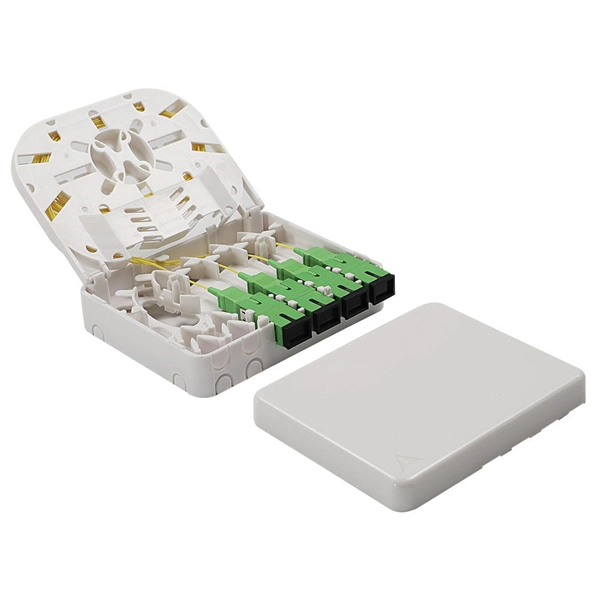
1310/1550+1590 nm Filter Wavelength Division Multiplexers
Lumentum 1310/1550+1590 nm filter wavelength division multiplexers (WDMs) use interference filter technology to separate or
Thorlabs · WD1450A 1480 nm / 1550 nm Wavelength Division
Look up a data sheet for a previously sold item. Our customer service teams will reach out if these items are revised.
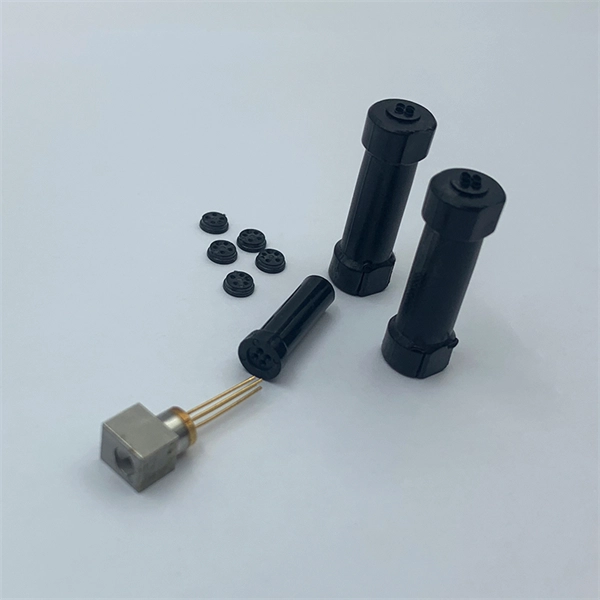
IR, 2-Wavelength, Single Mode WDMs (≥980 nm)
These WDMs are designed for combining or splitting two signals at 1550 nm and 1625 nm and feature a
1310/1550nm Micro-Optic Wavelength Division Multiplexer
1310/1550nm Micro-Optic Wavelength Division Multiplexer ACP''s Multimode Micro-Optics WDM proprietary design of non-flux metal
1310/1550 Fused WDM: Wide Bandwidth & High Isolation | GEZHI
The 1310/1550nm Wavelength Division Multiplexer (WDM) offered by GEZHI Photonics is a single-mode optical
PM 980/1550nm Micro-Optic Wavelength Division Multiplexer
Wavelength Division Multiplexing (WDM) involves transmitting signals at different wavelengths through the same fiber. ACP offers
1310 nm / 1550 nm Wavelength Division Multiplexers (WDM)
Multimode Wavelength Multiplexer -- MPS 2750 from Microwave Photonic Systems, Inc. The MPS-2750 Multimode Wavelength
1550/1590 nm Filter-Based Wavelength Division Multiplexers
Lumentum 1550/1590 nm filter wavelength division multiplexers (WDMs) are specifically designed to multiplex or demultiplex C- and
980/1550 nm few-mode wavelength division multiplexing
Abstract A few mode wavelength division multiplexing coupler (WDMC) based on a five-core fiber is proposed to couple
Wavelength-division multiplexing
Dense wavelength-division multiplexing (DWDM) refers originally to optical signals multiplexed within the
980/1550 Fused Wavelength Division Multiplexer: A Complete Guide
980/1550 Fused Wavelength Division Multiplexer: A Complete Guide 2025-10-01 In a 980/1550 Fused Wavelength
1510/1550 and 1550/1625 nm Filter-Based Wavelength
Lumentum 1510/1550 and 1550/1625 filter wavelength division multiplexers use interference filters to add a
An Ultra-Compact InP 1310/1550 nm Wavelength
An ultra-compact 1310/1550 nm wavelength division (de)multiplexer based on a channel
1064/1550nm Filter WDM
The 1064/1550nm Filter Wavelength Division Multiplexer is based on environmentally stable thin-film filter technology. The devices
1310/1550nm Micro-Optic Wavelength Division Multiplexer
1310/1550nm Multimode Micro-Optic Wavelength Division Multiplexer MECHANICAL DIMENSIONS 34mm (38mm) COMMON PASS
Related Resources
- Wireless Router After Fiber Optic Installation
- Frequent alarms from relay protection
- Troubleshooting if the optical module won t start
- Afghanistan Galvanized Molded Cable Tray Manufacturer
- Kenya CFP210G
- Dwdm and cwdm modules
- Flame-retardant outdoor plastic distribution box cover
- Data Center Cable Tray Solutions
- Custom-made flat steel cable trays
- Which quota should be applied to the network server rack
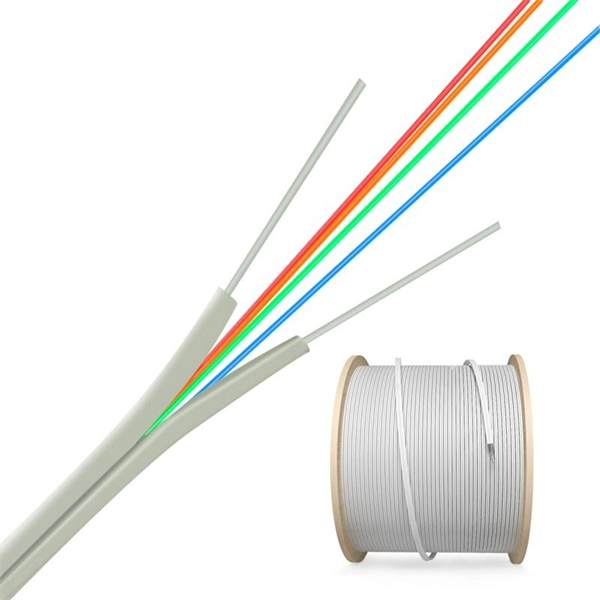
- Indoor and Outdoor Butterfly-Shaped Optical Cables
- Norway SC APC Fiber Optic Connector 1310nm
- Installation diagram of cable tray in Côte d Ivoire
- Cost of fabricating a 9-shaped elbow for cable trays
- Mesh-type hot-dip galvanized cable trays
- Installation of cable tray accessories
- Recommended single-mode fiber optic cables for home use
- Price range of multi-channel parallel optical modules
- Bends of bridge structures that change diameter when climbing uphill or downhill