Article Overview
WDM testing ensures that multiplexers and demultiplexers meet performance standards for insertion loss, crosstalk, channel separation, and polarization integrity.
Key Testing Parameters
- Insertion Loss (IL) Insertion loss measures the optical power reduction as light passes through the WDM. Low IL is critical to maintain signal strength across multiple channels. Testing involves connecting a calibrated light source at each input wavelength and measuring output power at the corresponding output port using an optical power meter.
- Crosstalk Crosstalk quantifies unwanted signal leakage between channels. High crosstalk can degrade signal quality, especially in dense WDM (DWDM) systems with narrow channel spacing. Testing typically uses a tunable laser to inject light at one wavelength while monitoring adjacent channels for leakage, ensuring crosstalk remains below specified thresholds (e.g., less than -40 dB for high-performance devices) as demonstrated in integrated photonic WDMs .
- Channel Spacing and Wavelength Accuracy WDM devices must maintain precise channel spacing to avoid interference. Testing involves scanning the input wavelengths and verifying that each output port corresponds to the correct wavelength with minimal deviation, particularly important in DWDM systems with 50–100 GHz spacing .
- Polarization Extinction Ratio (PER) For polarization-maintaining (PM) WDMs, PER testing ensures that the device preserves the polarization state of the input light. This is done by launching light along the slow axis of the fiber and measuring the ratio of power in the desired polarization to the orthogonal polarization at the output. High-quality PM WDMs typically achieve PER ≥20 dB .
- Return Loss and Reflection Testing for back-reflection ensures minimal signal reflection, which can interfere with other channels. Optical time-domain reflectometers (OTDRs) or optical spectrum analyzers (OSAs) are used to measure reflected power.
Testing Methods
- Optical Spectrum Analyzer (OSA) Method: Measures the spectral output of each channel to verify wavelength accuracy, channel isolation, and crosstalk.
- Power Meter Method: Measures insertion loss and uniformity across channels.
- Tunable Laser Source: Provides precise wavelength input for testing channel separation and crosstalk.
- Environmental Testing: WDMs are often tested across temperature ranges (e.g., -40 °C to 85 °C) to ensure stable performance under field conditions .
CWDM vs DWDM Testing Considerations
- CWDM: Wider channel spacing (typically 20 nm) allows simpler testing with standard light sources and power meters.
- DWDM: Narrow channel spacing (50–100 GHz) requires high-resolution tunable lasers and OSAs to accurately measure crosstalk and wavelength alignment .
Summary
Effective WDM testing involves verifying insertion loss, crosstalk, channel accuracy, polarization maintenance, and reflection. Using calibrated light sources, optical spectrum analyzers, and power meters ensures that both CWDM and DWDM devices meet performance specifications, enabling reliable high-capacity optical communication. Proper testing is essential for both lab validation and field deployment to maintain signal integrity across multiple wavelengths.
Wavelength Division Multiplexing: A Comprehensive Guide
Discover the comprehensive guide to Wavelength Division Multiplexing, its role in optical properties, and its
Research on Optimization and Application of Wavelength Division
This paper discusses in detail the wavelength division multiplexing (WDM) technology, which effectively increases the
High-performance Si-based on-chip wavelength division (de)multiplexer
Abstract Sequential quadratic programming (SQP) and the finite element method (FEM) are employed simultaneously
High-Performance Wavelength Division
Here, we develop a novel design approach that co-optimizes inverse-designed wavelength division multiplexers and distributed
Wavelength Division Multiplexing
Wavelength division multiplexing is a multiplexing technique working in the wavelength domain. It is
Wavelength Division Multiplexing (WDM) | Springer Nature Link
Wavelength division multiplexing or WDM allows the combining of a number of independent information-carrying
Wavelength Division Multiplexers (WDM)
Wavelength Division Multiplexing (WDM) is a technique in fiber-optic communication systems that enables multiple optical signals
Wavelength division multiplexing
This section contains examples of wavelength division multiplexing (WDM) circuits. Wavelength division multiplexing is a method of
FOA Tech Topics: DWDM, Dense Wavelenght Division Multiplexing
Although most cable plants included many spare fibers when installed, bandwidth growth has used many of them and new capacity
Wavelength Demultiplexer
5.8 Summary Wavelength division multiplexing has become standard in the engineering of cable television and similar networks
Introduction to Coarse Wavelength Division Multiplexing (CWDM
The focus of this paper is on the basics of designing and deploying Coarse Wavelength Division Multiplexing (CWDM) systems
Full Bandwidth Wavelength Division Multiplexer/Demultiplexer Based
In this letter, we design and experimentally demonstrate a four-channel full-band wavelength division multiplexing
Wavelength-division multiplexing
This technique enables bidirectional communications over a single strand of fiber (also called wavelength
Optically Multiplexed Systems: Wavelength Division Multiplexing
he need of multiplexers, specifically wavelength division multiplexers. A few popu ar optical multiplexing techniques are discussed
Wavelength Division Multiplexing (WDM)
Wavelength Division Multiplexing (WDM) Abstract Wavelength division multiplexing or WDM allows the combining of a number of
What is Wavelength Division Multiplexing (WDM): A
Introduction to Wavelength Division Multiplexing (WDM) Wavelength Division Multiplexing
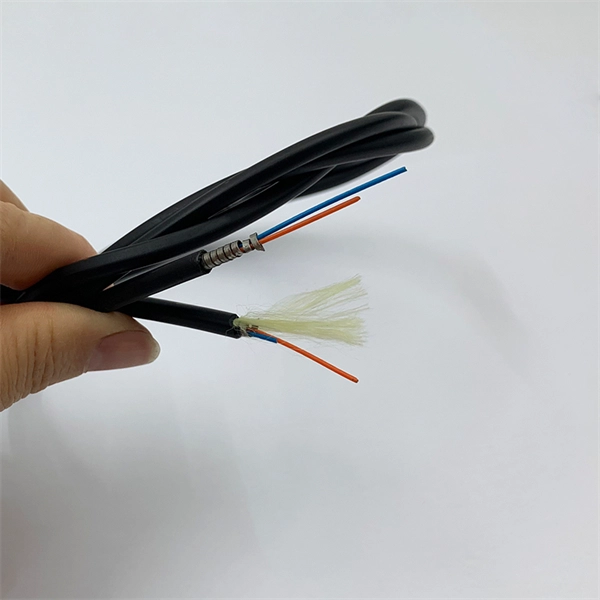
3.5 Wavelength multiplexing and demultiplexing
3.5 Wavelength multiplexing and demultiplexing Wavelength multiplexers and demultiplexers are needed in order to be able to use
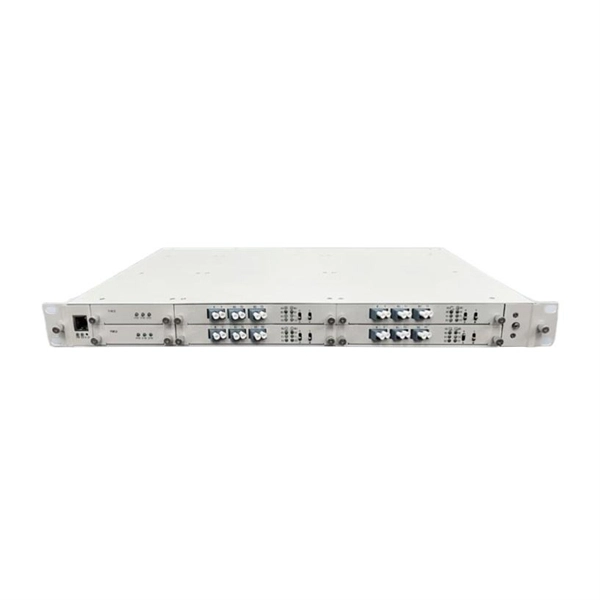
2-Wavelength, Polarization-Maintaining WDMs
Thorlabs'' PM WDMs provide an PER of ≥20 dB including connectors and a wide -40 °C to 85 °C operating range. These WDMs
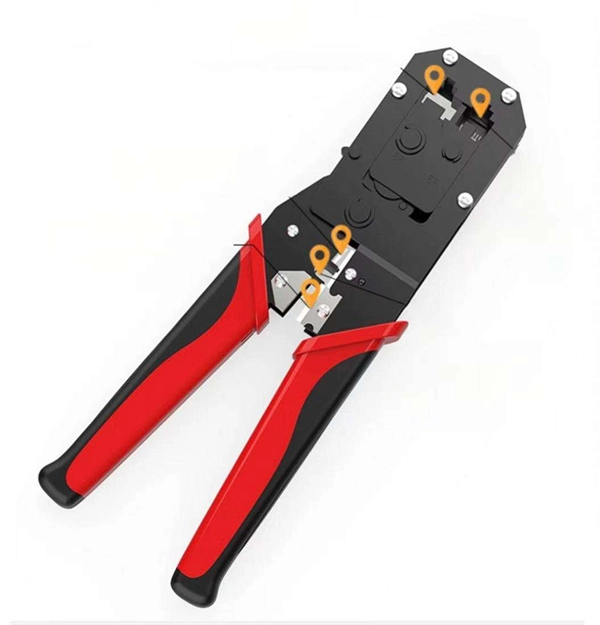
Optically Multiplexed Systems: Wavelength Division Multiplexing
This ushered in the need of multiplexers, specifically wavelength division multiplexers. A few popular optical
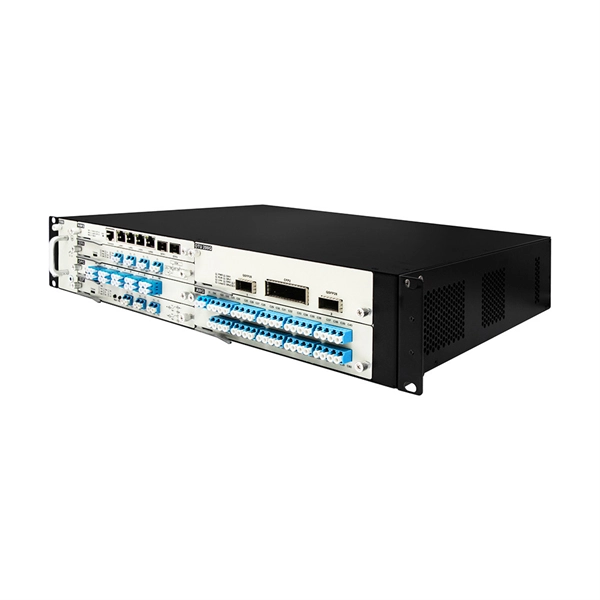
Wavelength division multiplexers and some experimental analysis in
This article will describe the basic principles and some applications of wavelength division multiplexing and then compare the
WDM 101 | Optical Communications | Corning
In these videos, our experts break down wavelength division multiplexing to help you get the most from your fiber. We''re covering the
Fiberdyne Labs'' Intro to Coarse Wavelength Division Multiplexing
Fiberdyne Labs'' Coarse Wavelength Division Multiplexing (CWDM) is a technique, which uses a special property of fiber-optics.
Parallel wavelength-division-multiplexed signal transmission and
Here we propose a scalable on-chip parallel IM-DD data transmission system enabled by a single-soliton Kerr
Testing DWDM in Deep Fiber Applications
In the Testing CWDM in Deep Fiber Applications, we talked about testing and troubleshooting Coarse Wave Division Multiplexing
Inverse Design of a High-Performance Wavelength Division
This article introduces topology optimization theory into the design of topological photonic crystals, aiming to achieve
Introduction To WDM | part of Wavelength Division Multiplexing: A
This introductory chapter of Wavelength Division Multiplexing: A Practical Engineering Guide traces the history of wavelength division
Arrayed electro-optic modulators for novel WDM
In this paper, a novel silicon-on-chip integrated 4 × 1 wavelength division multiplexing
Understanding Wavelength Division Multiplexing (WDM)
Wavelength Division Multiplexing (WDM) is form of combining multiple signals on laser beams at various IR wavelengths transmitted
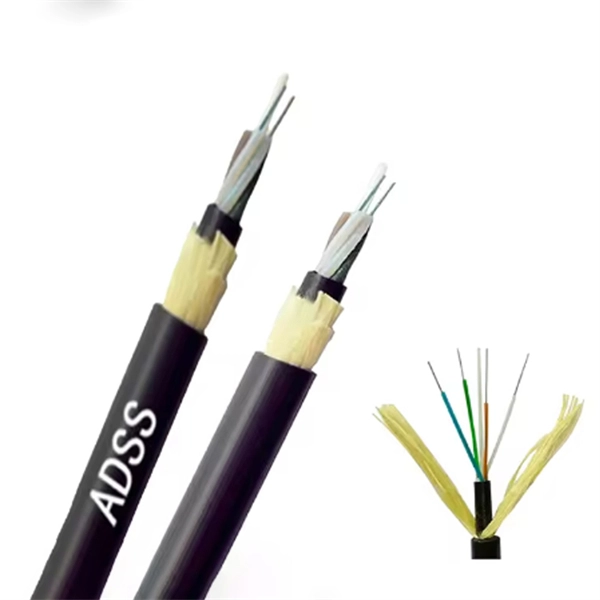
Wavelength-Division Multiplexing (WDM)
WDM increases transmission capacity per fiber WDM is an abbreviation for Wavelength-Division Multiplexing, and is
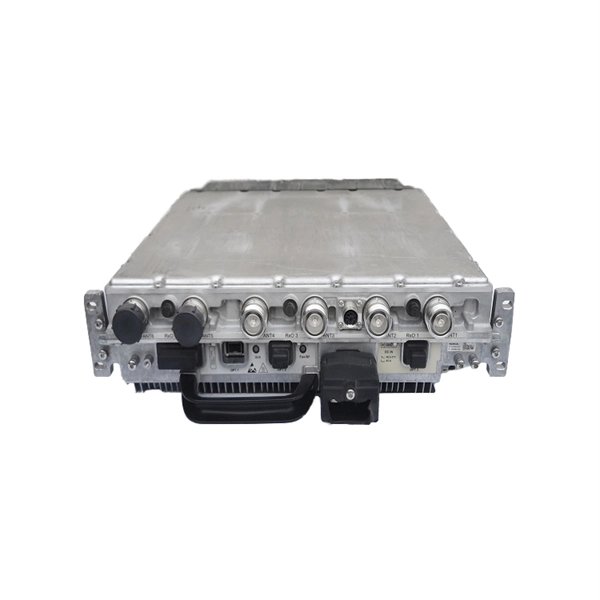
Wavelength Division Multiplexing
Wavelength division multiplexing (WDM) is a technique of multiplexing multiple optical carrier signals through a single optical fiber
Related Resources
- New Installation Solution for Belgian Corrugated Conduit
- Procurement of Large-Span Cable Trays in Estonia
- Benin Steel Cable Management System Manufacturer
- Chad Fireproof Cable Tray Construction
- Fition Optical-to-Electrical Module
- Price of Azerbaijan Single-Mode Fiber Optic Transceivers
- Fireproof materials for cable trays in Ecuador
- Does fiber-to-the-home FTTH include fusion pigtails
- New CIF Price for the Dutch Export Energy Internet
- Danish Mobile Optical Cable Manufacturer
- Power consumption of Uruguay s double-row cold aisle server room
- How to use the beam splitter upstairs
- Low-loss procurement of air-cooled switches
- Algeria Photovoltaic Cable Tray Tender Information